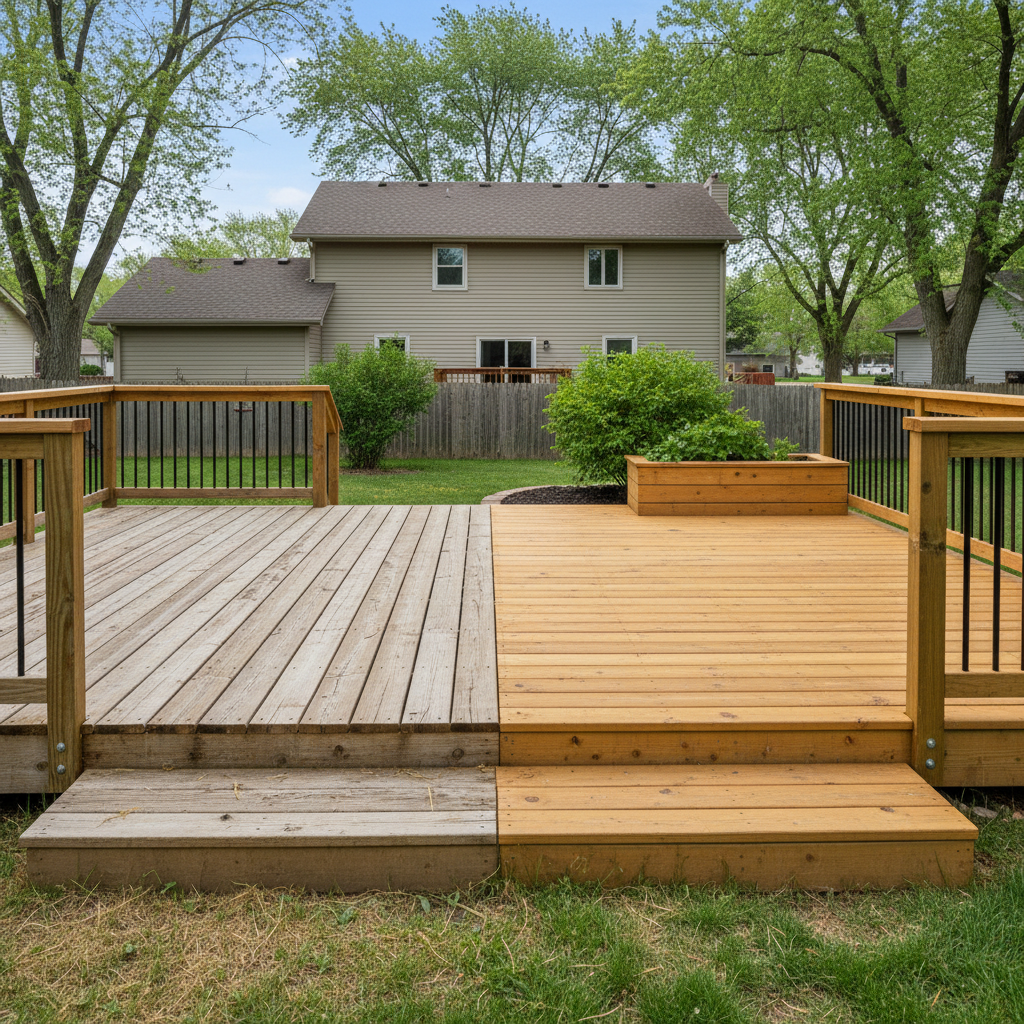
You're thinking about a new wooden deck, right? That's a great investment for any home here in Bellevue. But then you hit the first big decision: what kind of wood should you use? Two of the most common options I see folks wrestling with are pressure-treated lumber and natural cedar. Both have their pros and cons, and what works best really depends on what you're looking for.
Pressure-Treated Lumber: The Workhorse
Let's start with pressure-treated wood. This is probably what you think of when you hear 'wooden deck.' It's typically pine, fir, or spruce that's been infused with chemical preservatives under high pressure. That treatment makes it resistant to rot, fungi, and insect infestation. It's tough stuff, built to last, especially against the kind of moisture we get here in Nebraska.
Cost: This is where pressure-treated really shines. It's almost always the most budget-friendly option upfront. You'll pay significantly less per linear foot for pressure-treated lumber compared to cedar. For a typical 12x16 foot deck, that cost difference can be hundreds, sometimes even over a thousand dollars, just in materials.
Durability: It's built to withstand the elements. Those chemicals do a great job protecting the wood. You're looking at a deck that can easily last 20-30 years, sometimes more, with proper care. It handles our crazy Nebraska weather swings – from freezing winters to humid summers – pretty darn well.
Maintenance: You can't just build it and forget it, though. Pressure-treated wood needs regular cleaning and sealing or staining every 1-3 years. This protects the surface from UV damage, keeps moisture out, and helps prevent warping and splintering. If you skip this, it'll gray out and start to look pretty rough over time.
Appearance: When it's new, it often has a greenish tint from the treatment, which fades to a honey-brown and then eventually to a silvery-gray if left unstained. It's not as naturally beautiful as cedar, but it takes stain really well, so you can achieve a wide range of colors to match your home.
Cedar: The Natural Beauty
Now, let's talk about cedar. This is a premium choice, and for good reason. Cedar is naturally resistant to rot, decay, and insects because it contains natural oils called thujaplicins. It's a beautiful wood that adds a lot of curb appeal.
Cost: Get ready for a higher price tag. Cedar is generally 2 to 3 times more expensive than pressure-treated lumber. That's a big jump, and it's often the main reason people opt for something else. For a bigger deck, that cost difference can be substantial.
Durability: Cedar is naturally durable, but it's a softer wood than some of the species used for pressure treatment. It's less prone to warping and checking than pressure-treated wood, which is a plus. With proper maintenance, a cedar deck can also last 20-25 years. However, it's not quite as hard-wearing against physical impact or heavy traffic as pressure-treated pine can be.
Maintenance: Similar to pressure-treated, cedar needs regular cleaning and sealing or staining. The natural oils help, but UV rays will still turn it gray if it's not protected. Staining every 2-4 years will keep it looking its best and extend its life. Some folks love that natural gray patina, though, so it depends on your preference.
Appearance: This is where cedar truly shines. It has a gorgeous reddish-brown color, a distinctive grain, and a pleasant aroma. It looks fantastic stained or even just sealed to highlight its natural beauty. It gives your home a really high-end, classic look, which is why you see it on a lot of homes in older, established neighborhoods like Fontenelle Forest.
My Recommendation for Bellevue Homes
Here's the deal: for most homeowners in Bellevue, especially with our soil conditions and temperature swings, pressure-treated lumber is usually the smartest choice for the deck structure and framing. It's incredibly strong, cost-effective, and those chemicals really do the job protecting against rot and insects in our humid summers and damp springs. It's the backbone you want.
Now, for the decking boards themselves, that's where you have more flexibility. If budget is your absolute top priority, go with pressure-treated for the deck surface too. It'll look great with a good stain, and it'll last. But if you've got a bit more room in your budget and you really want that premium look and feel, consider using cedar for the actual deck boards, railings, and steps, while still using pressure-treated for the joists and posts underneath. That way, you get the best of both worlds: the strength and affordability of pressure-treated where it counts for structural integrity, and the beauty of cedar where you see and touch it every day.
Ultimately, both are solid choices. It just comes down to your budget, how much you value natural aesthetics, and your willingness to keep up with maintenance. Either way, a well-built wooden deck from All Star Decks will add value and enjoyment to your Bellevue home for years to come.